

Data centers require controlled temperature and humidity
Data centers form the very backbone of modern digital society. They are expected to provide stable operation 24 hours a day, year-round. At the same time, they are handling ever-increasing power densities from AI, cloud storage, and heavy-duty computing.
To achieve this, temperature, humidity, airflow, and cooling must be precisely controlled. An improper indoor climate quickly leads to higher energy consumption, increased wear and tear, static electricity, and the risk of costly downtime.
Temperature and Humidity – Critical Factors in Data Centers
Unlike typical office buildings, the indoor climate in a data center is not about comfort, but about operational reliability and energy efficiency. Servers, storage devices, and network equipment generate enormous amounts of heat that must be continuously removed. At the same time, relative humidity must be kept within strict limits to prevent both static electricity and condensation.
ASHRAE TC 9.9 is the leading international standard. For air-cooled data centers (Classes A1–A4), a temperature range of 18–27 °C is recommended, combined with defined limits for dew point and relative humidity. The standards emphasize that temperature, humidity, dew point, and airflow must be considered in conjunction with one another.
Risks Associated with Incorrect Humidity Levels
Proper irrigation is therefore not about applying as much water as possible, but about precise, controlled application in the right place and at the right time.
Adiabatic cooling – energy-efficient heat management
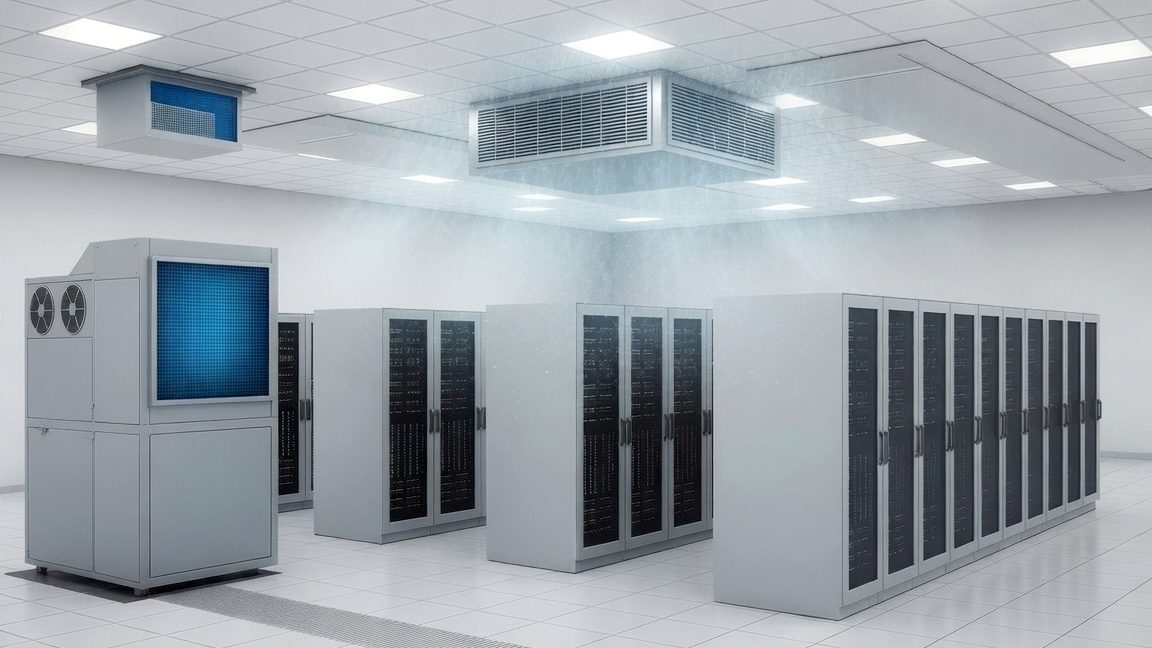
Adiabatic cooling harnesses water’s natural evaporative energy. Micro-fine water droplets evaporate in the incoming air, effectively lowering the temperature and reducing the load on traditional cooling systems.
Benefits for data centers:
PUE remains the most important key performance indicator for data center efficiency. The smaller the proportion of energy used for cooling and support systems, the better the outcome—both financially and environmentally.
The International Energy Agency (IEA) estimates that global electricity consumption by data centers could reach around 945 TWh by 2030. In such a scenario, energy-efficient cooling becomes a strategic necessity.
Lower service costs and reduced downtime
Less strain on mechanical cooling systems means lower maintenance requirements and fewer outages. For a data center, every hour of downtime is extremely costly. Preventive measures such as adiabatic cooling and precise humidity control are therefore among the most profitable investments.
The European Commission’s Code of Conduct on Data Center Energy Efficiency also emphasizes the importance of energy-efficient cooling solutions as part of best practices.
Water Consumption – A Balanced Assessment
Adiabatic cooling uses water, but a properly designed solution yields significant energy savings that often offset the water consumption. The Uptime Institute, a global data center authority, points out that water usage must be assessed locally based on climate, water resources, and technical design. Many data centers use far less water than the general perception suggests when their systems are optimized.
A Customized Solution for Data Centers
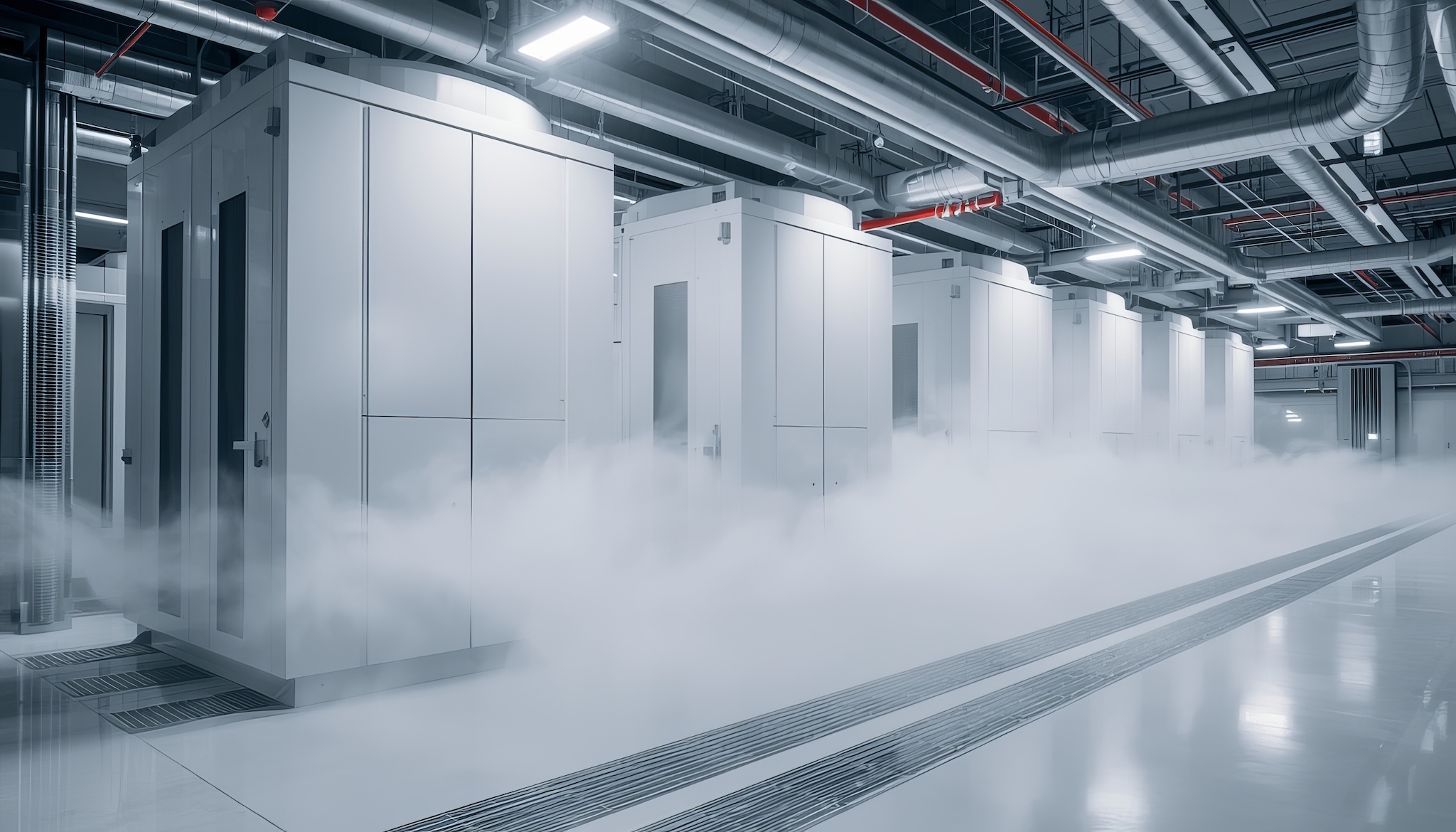
Modern high-pressure systems produce extremely finely dispersed water vapor that evaporates quickly without dripping or the risk of condensation. The systems are custom-designed based on:
The result is precise control, high reliability, and verifiable energy efficiency.
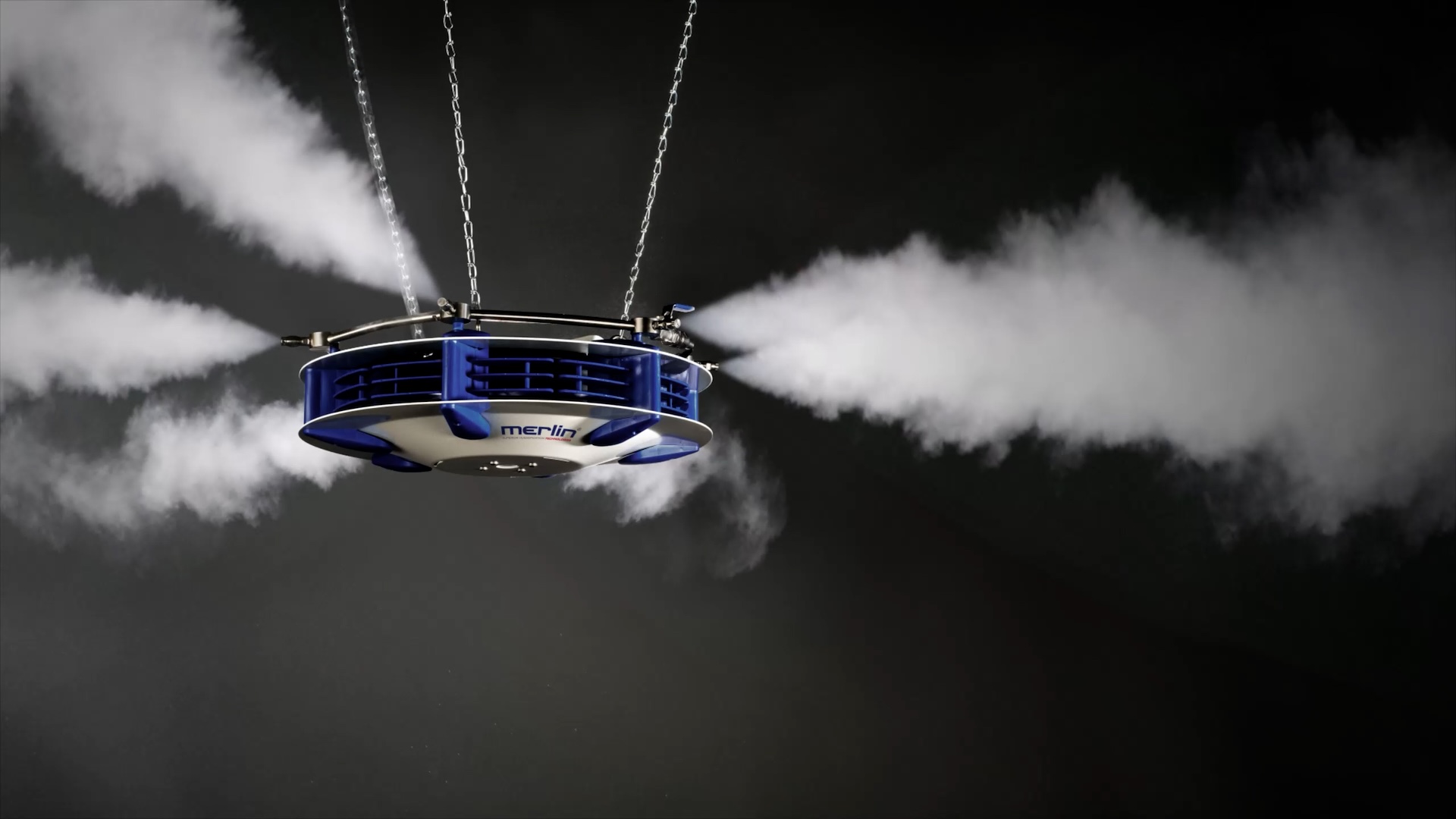
What Investing in Humidification and Cooling Actually Delivers
This is particularly relevant for both new hyperscale facilities and existing data centers that are upgrading to handle increasing AI workloads.
A Controlled Indoor Climate as a Competitive Advantage
In an industry where uptime, energy consumption, and sustainability are directly linked to profitability, precise temperature and humidity control is no longer a support function—it is a core business activity.
Klimabefuktning AS provides customized high-pressure solutions for humidification and adiabatic cooling to data centers throughout Norway. We help operators optimize indoor climate, reduce risk, and achieve better PUE values.
Would you like to learn more about how air humidification makes data center operations more energy-efficient and reliable?
Contact us for a no-obligation site visit and consultation. We’ll provide you with specific solutions tailored to your facility and your requirements.
References:
https://www.iea.org/reports/energy-and-ai/energy-demand-from–ai
https://publications.jrc.ec.europa.eu/repository/handle/JRC141521