

Humidification and painting: Economy + Comfort
Why humidify in paint booths and painting processes?
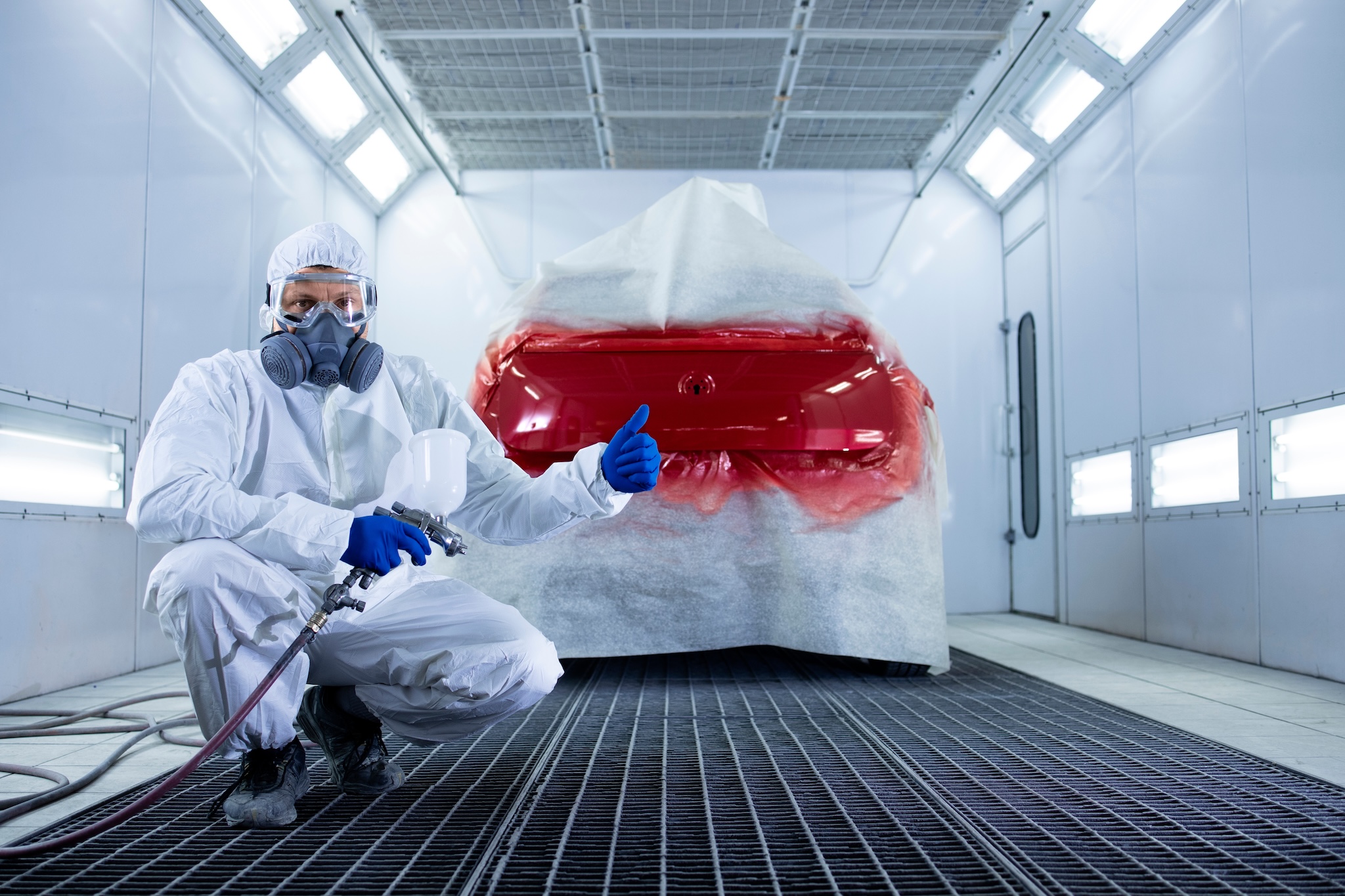
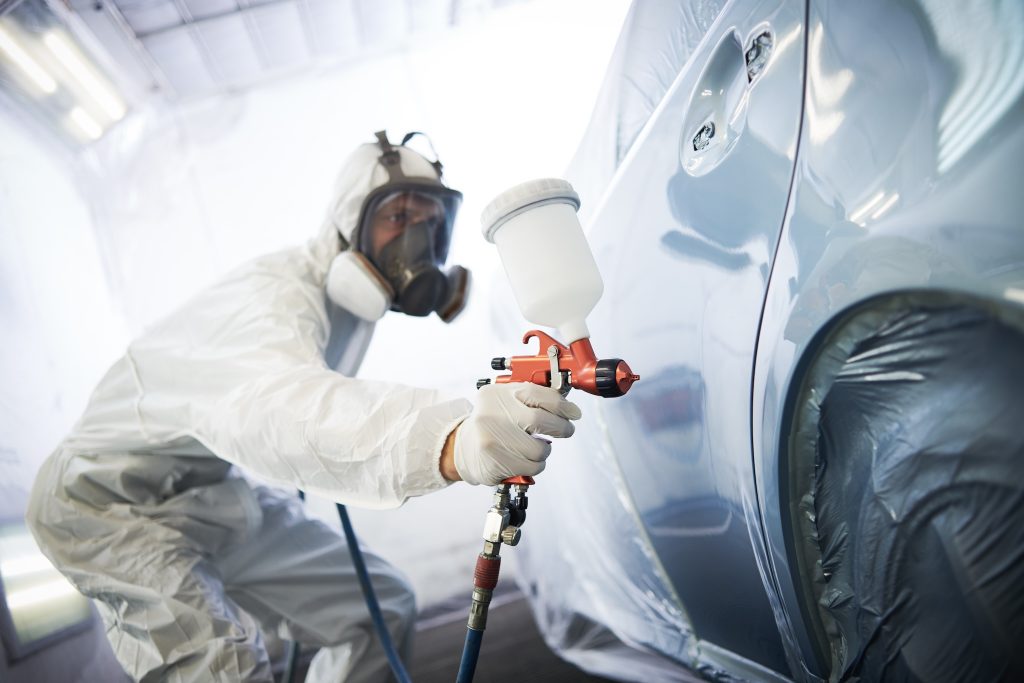
In modern refinishing, humidity is one of the most important factors when it comes to stable quality, efficiency and low wastage. New low-solvent and water-based coatings have made precise control of relative humidity (RH) crucial. Proper humidification can be one of the most profitable investments in a paint shop.
Optimal humidity in the spray booth – better results and fewer errors
For water-based paints and basecoats, the optimal humidity level is 65-75% RH. This provides several tangible benefits:
- Stable atomization and even spray pattern
- Reduced rapid evaporation of the paint
- Smoother pigment distribution
- More uniform application rate
- Much lower risk of drying ridges, orange peel, popping and other surface defects
The result? By ensuring a stable and correct humidity in the paint booth, you will be able to guarantee a neater finish to a much greater extent, resulting in fewer complaints and significantly less need for rework.
Problem with dry air after curing and in inspection
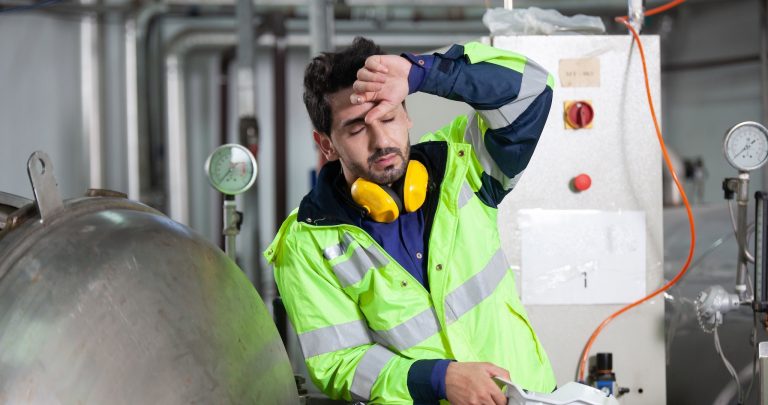
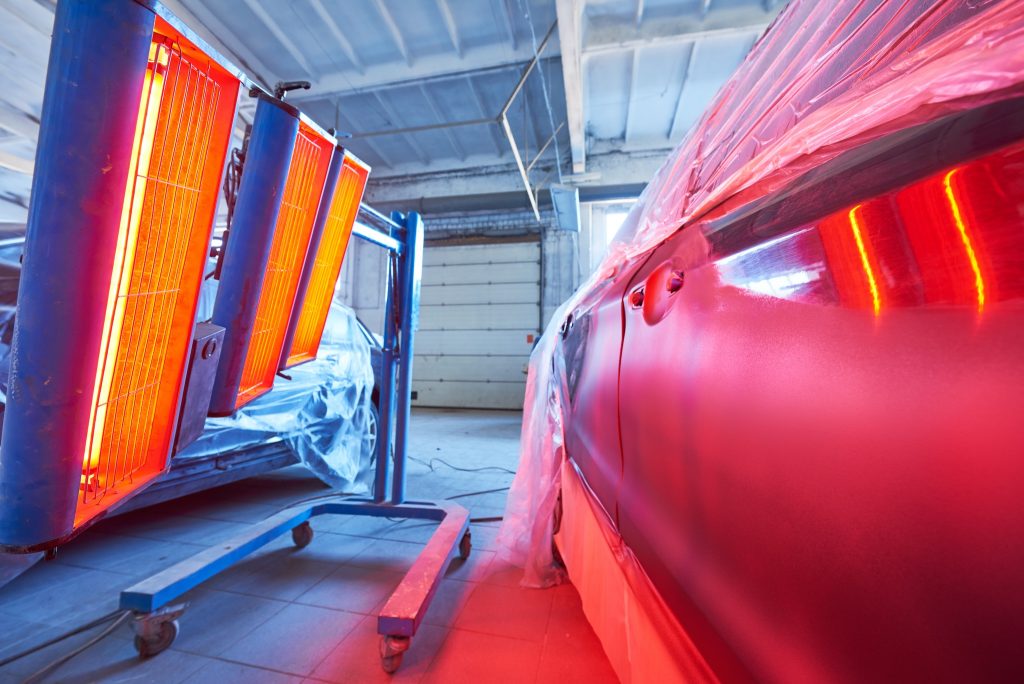
You don’t normally want high humidity in the drying and curing oven itself – it’s dry and warm there. The challenge arises afterwards when the parts come out and are transported for grinding, inspection and possible repair in hot, dry halls.
Typical RH of 10-20% and temperatures up to 35-40°C create several problems:
- Reduced comfort for operators
- Powerful static electricity
- Strong attraction of dust and particles to the still sensitive paint
- Poorer working environment and comfort for operators
- Increased risk of quality defects
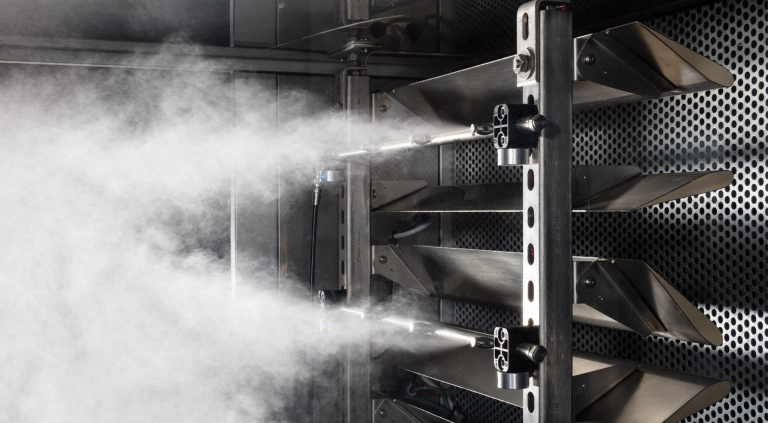
With adiabatic humidification/cooling, you can effectively change the air from e.g.:
35 °C / 15% RH → 22 °C / 65% RH.
This has several advantages for production:
- Reduces air temperature
- Increases relative humidity
- Reduces static electricity
- Improves working environment and productivity
Concrete example: Two extra cars per day!
Ensuring an optimum level of humidity in the paint booth will save considerable time and resources. This applies in particular to the curing process:
- At 20 °C and normal humidity → curing of car in approx. 12 minutes
- In very dry air → you need to reach 45°C and spend about 20 minutes to achieve the same degree of hardening
The consequences can be enormous over time:
- Much higher energy consumption (heating to 45°C)
- Longer cycle times → reduced capacity
- Often need for extra ovens or shifts to keep production up
With the right humidity, many workshops can produce 1.5-2 extra cars per day without hiring more people or expanding lines. This quickly adds up to large annual gains – plus lower energy costs and CO₂ emissions.
If you take into account the reduced costs of car paint, you can save hundreds of thousands a week – that’s several million kroner extra a year!
Electrostatic painting and powder coating – sensitive to moisture
Both electrostatic wet paint and powder coating depend on a good charge difference between the particles and the workpiece.
Too high RH → charge leaks away → poor adhesion and more overspray → requires more material for the same finish
Too low RH → the powder charges poorly → low transmission rate, uneven thickness, Faraday effects and increased risk of sparking.
In both cases, material consumption, waste and quality deviations increase. Typical optimal range for powders is often 45-60% RH.
Dipping processes and electroplating
In multi-stage surface treatment, components are moved between different baths. In hot and dry environments, low humidity can provide:
- Too fast and uneven drying between processes
- Stains and blemishes
- Surface deterioration before the next step
This can lead to components having to be stripped and reworked – a time-consuming and costly process. Maintaining 50-60% RH in the air environment prevents rapid surface drying and ensures stable process conditions.
Environmental control in paint shops
Temperature and humidity are normally controlled via ventilation and air handling units (AHU) with integrated humidification, delivering equal conditioned air directly to spray booths and all associated zones.
This is not ideal for automotive refinishing with waterborne paints, where you need precise RH, low energy use, minimal maintenance and simultaneous cooling in inspection areas.
This can be solved by:
- Direct adiabatic systems
- Dedicated AHUs for each box
- Integrated systems provided by box manufacturer
- Positively pressurized spaces around the painting zone
The goal is stable temperature, correct RH and clean air – adapted to each phase of the process.
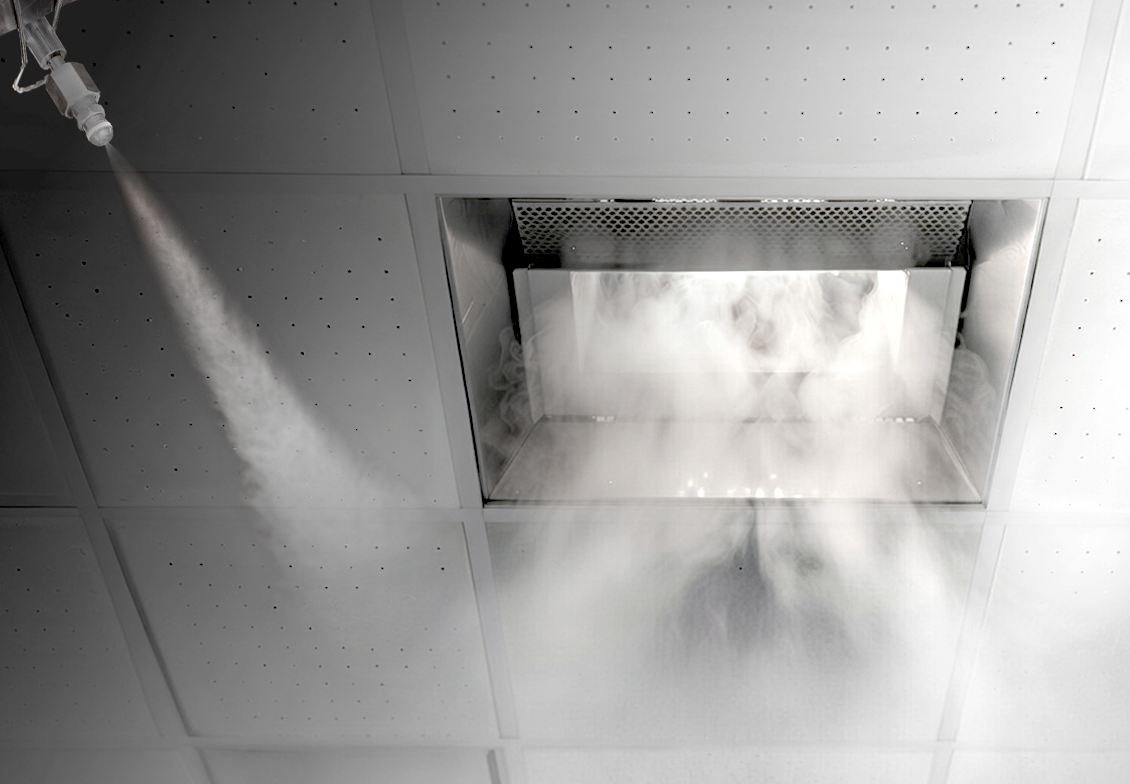
The industry is moving towards direct adiabatic systems (often placed close to the box or as a dedicated module) for better efficiency and quality. If you have an existing AHU setup, upgrading to evaporative technology can provide quick wins through lower resource usage and fewer errors.
Humidification as a production tool
- Dry air → longer curing time, higher temperature, higher energy costs, more dust and static
- Correct relative humidity → faster production, better quality, less waste, lower energy consumption and better working environment
In today’s refinish industry, humidification isn’t just a comfort measure – it’s a competitive advantage and a directly profitable investment.
Do you have a paint shop that struggles with dust, long curing times or uneven finishes? Or do you want to further optimize and streamline your production? Then a review and control of humidity may be the most cost-effective measure you take.
Klimabefuktning AS will assess which measures are best suited to your company and offer customized solutions for all stages of production.
Relevant source material:
https://ph.health.mil/resources/TG144_NOV2012.pdf
https://www.nasa.gov/wp-content/uploads/2023/03/prc-4002-current.pdf
https://www.osha.gov/otm/section-3-health-hazards/chapter-3
https://www.epa.gov/sites/default/files/2014-08/documents/moisture-control.pdf