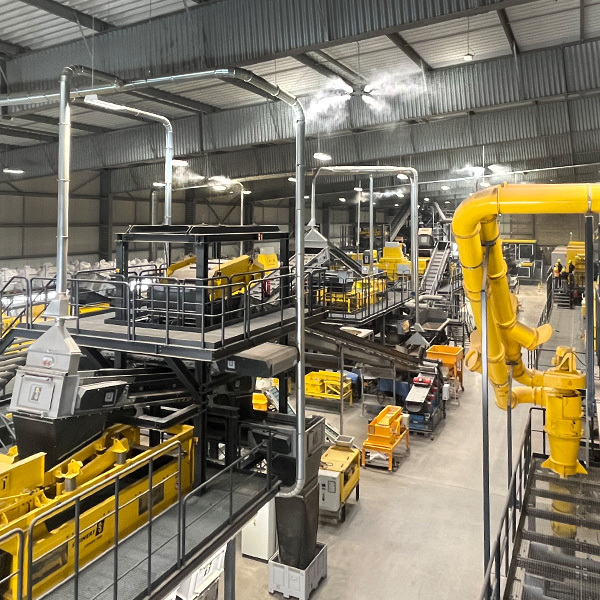


Will humidification extend the lifespan of machinery and production equipment?
Investments in machinery and equipment are often a major expense for companies in the start-up phase. Furthermore, it’s crucial that they function optimally at all times to keep efficiency and production quality at a consistently high level. Frequent maintenance, downtime and replacement can result in significant additional costs and loss of revenue over time.
Lately, a growing number of companies are searching for answers on how to best take care of machinery and production equipment, and generally ensure optimal operations:
– How to extend the lifespan of machines?
– Why do we get more downtime in winter?
– Can dry air damage production equipment?
– What is optimal humidity in industrial buildings?
In many cases, the answer comes down to an underestimated factor: the humidity in the production room!
At Klimabefuktning, we see on a daily basis how excessively dry air affects machines, electronics and mechanical components. Proper industrial humidification isn’t just about comfort – it’s about reliability, maintenance costs and the lifespan of your machinery.
Dry air in industry – a typical Nordic problem
In Norway in winter, relative humidity (RH) often falls below 30% in heated buildings. In many production facilities, values as low as 15-20% are measured.
When the humidity is so low, several familiar challenges arise:
Over time, this means increased wear and tear on machinery and production equipment. Many people experience more minor faults and unstable operation in winter – without linking it directly to the humidity in the industrial building.
Static electricity takes its toll on electronics
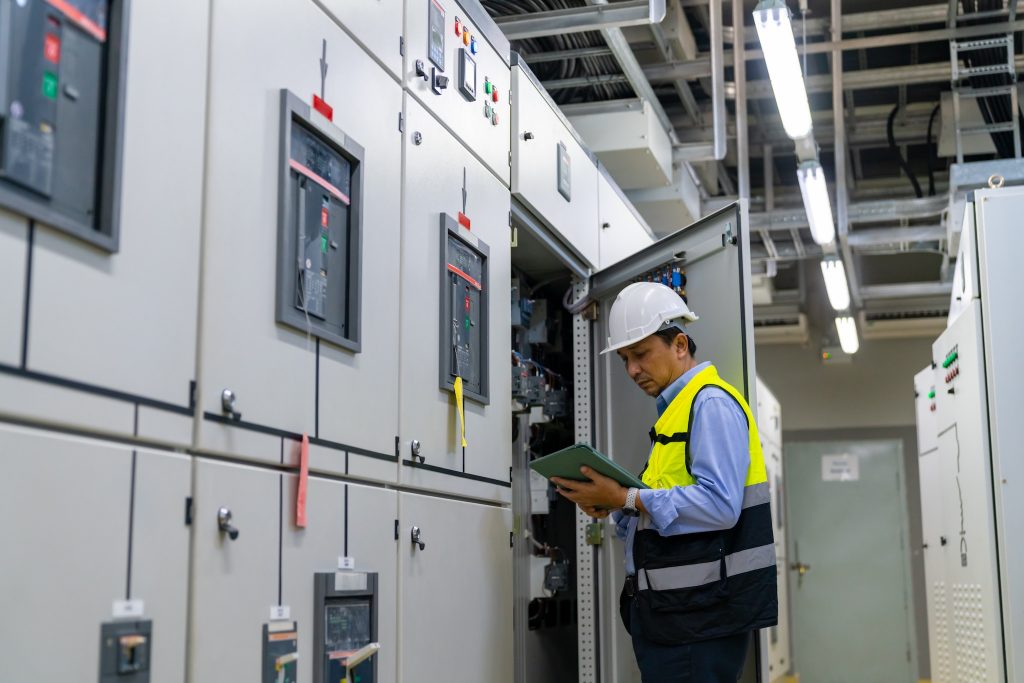
Modern production equipment contains advanced electronics: sensors, circuit boards, frequency converters and PLC controllers. These components are sensitive to electrostatic discharge (ESD).
When humidity levels are too low, the risk of static electricity increases significantly. Even small, invisible discharges can, over time, weaken electronics and reduce the life of components.
By stabilizing the humidity between 40 and 55% RH, the build-up of static electricity is drastically reduced. The result is more stable operation and fewer unplanned stops.
This is particularly important in paint shops, the wood industry, the concrete industry, food production, the packaging industry and mechanical workshops.
Less dust means less mechanical wear and tear
Low humidity keeps dust particles suspended for longer. These are drawn into engines, bearings and cooling systems, where they increase friction and temperature.
The consequences of too low RH are:
Industrial humidification reduces the amount of airborne particles by binding dust and making it fall faster. Cleaner air means less strain on machinery.
For many businesses, this results in a direct reduction in maintenance costs.
Stable humidity provides stable materials – and quieter machines
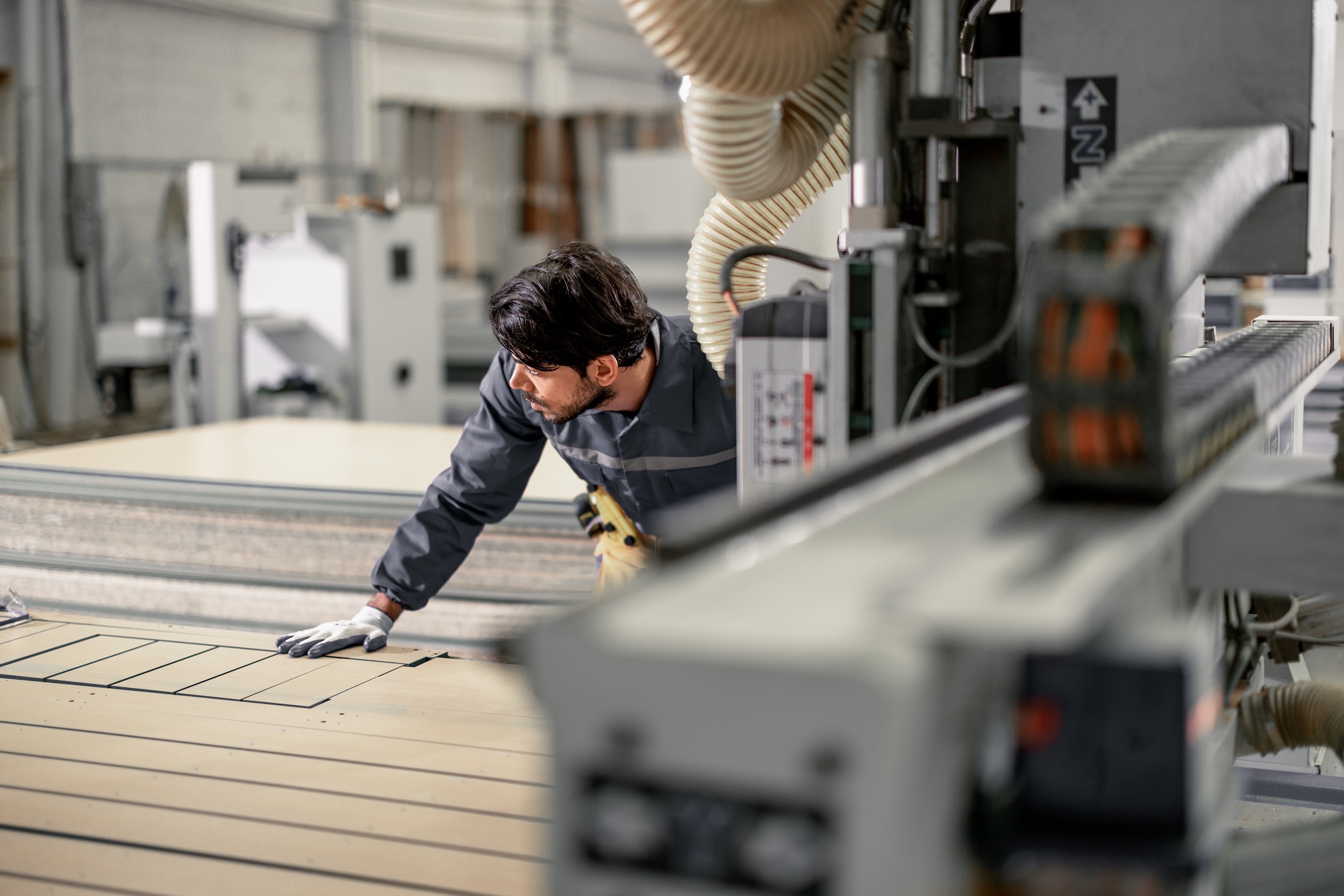
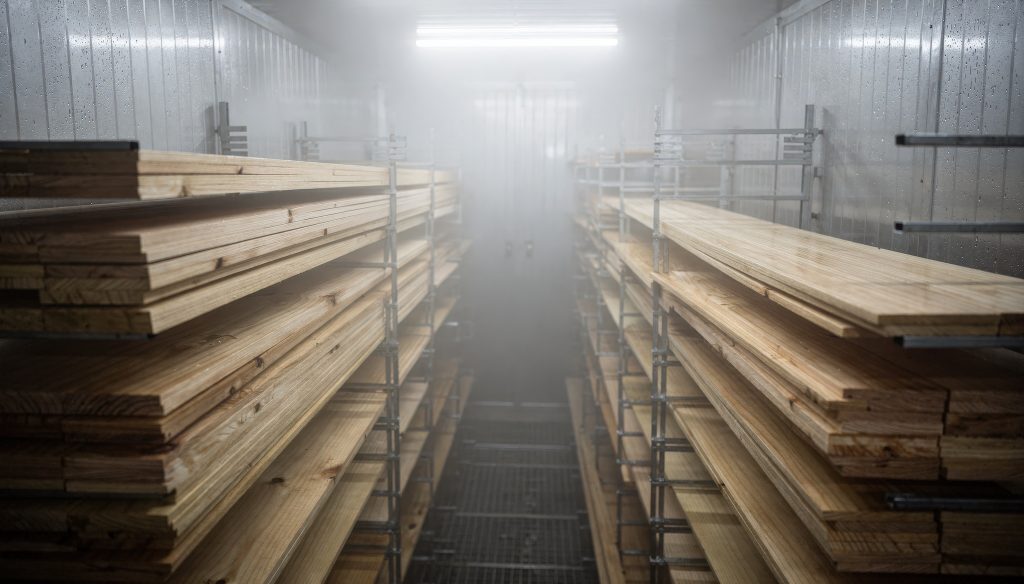
In production that handles wood, paper, cardboard or textiles, humidity affects the dimension and stability of the materials. Too low relative humidity can lead to shrinkage and altered tolerances. Machines then have to work harder, be adjusted more often and be subjected to greater mechanical stress.
When the humidity is stabilized, the materials are also stabilized. Machines run smoother, vibrations are reduced and wear and tear over time is reduced.
What is the optimal humidity level in a production room?
For most industrial environments, a relative humidity between 40 and 55% is recommended.
Keeping RF stable at this level will:
It’s not about the highest possible humidity – but about controlled and correct levels adapted to production.
Frequently asked questions about humidity in industry
Can dry air really damage machines?
The answer is yes. Over time, low humidity can lead to increased static electricity, more dust and greater mechanical stress. This reduces the lifespan of both electronics and moving parts.
How low humidity is problematic?
When relative humidity falls below 30%, the risk of ESD and dust problems increases significantly. Many industrial buildings are below this level in the fall and winter.
Can humidification reduce downtime?
Stable humidity reduces the risk of electronic failures, feeding problems and dust-related stoppages. This results in more predictable operation and fewer interruptions.
Is industrial humidification profitable?
Looking at reduced maintenance costs, fewer breakdowns and extended service lifespan of machines, many find that the investment provides a good return over time.
A technical investment – not just comfort
Correct humidity in production facilities is about more than indoor climate. It’s about protecting your investment in machinery and production equipment.
Machines don’t just wear out from use – they also wear out to a large extent from the environment they are in.
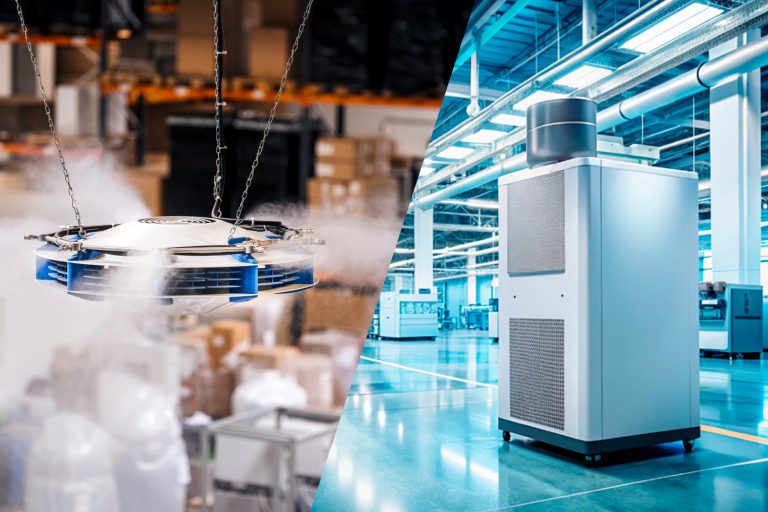
At Klimabefuktning AS, we design and deliver energy-efficient humidification systems to industrial and production environments throughout Norway. We map existing humidity levels, analyze challenges related to dust and static electricity, and adapt the solution to each individual company.
Do you want to know how the humidity in your premises affects your machinery?
Contact us for a non-binding assessment.
Relevant research articles:
https://pmc.ncbi.nlm.nih.gov/articles/PMC8664457
https://www.sciencedirect.com/science/article/abs/pii/S0263224125025333
https://pmc.ncbi.nlm.nih.gov/articles/PMC4072227