

New requirements for silica dust – why air control is crucial
In 2026, the Norwegian Labor Inspection Authority and occupational health services are increasing their focus on silica dust and general dust levels in the working environment. The authorities are now carrying out considerably more inspections and controls aimed at industries where silica dust and high dust levels are a real risk.
This applies in particular to the construction industry, concrete production, stone processing, industrial processing and material handling. Many companies have already been visited recently, and more are on the way.
Silica dust and silicosis
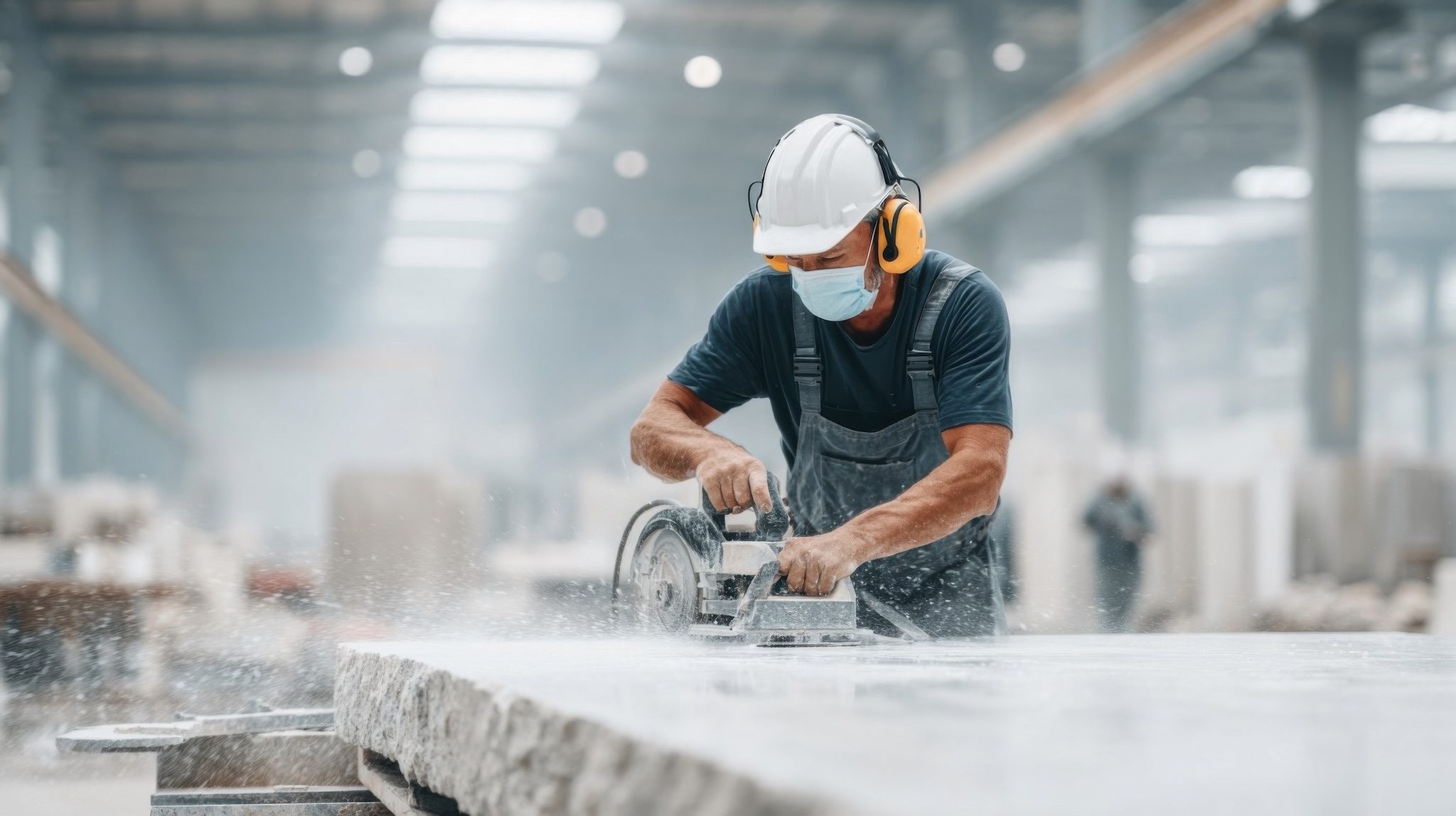
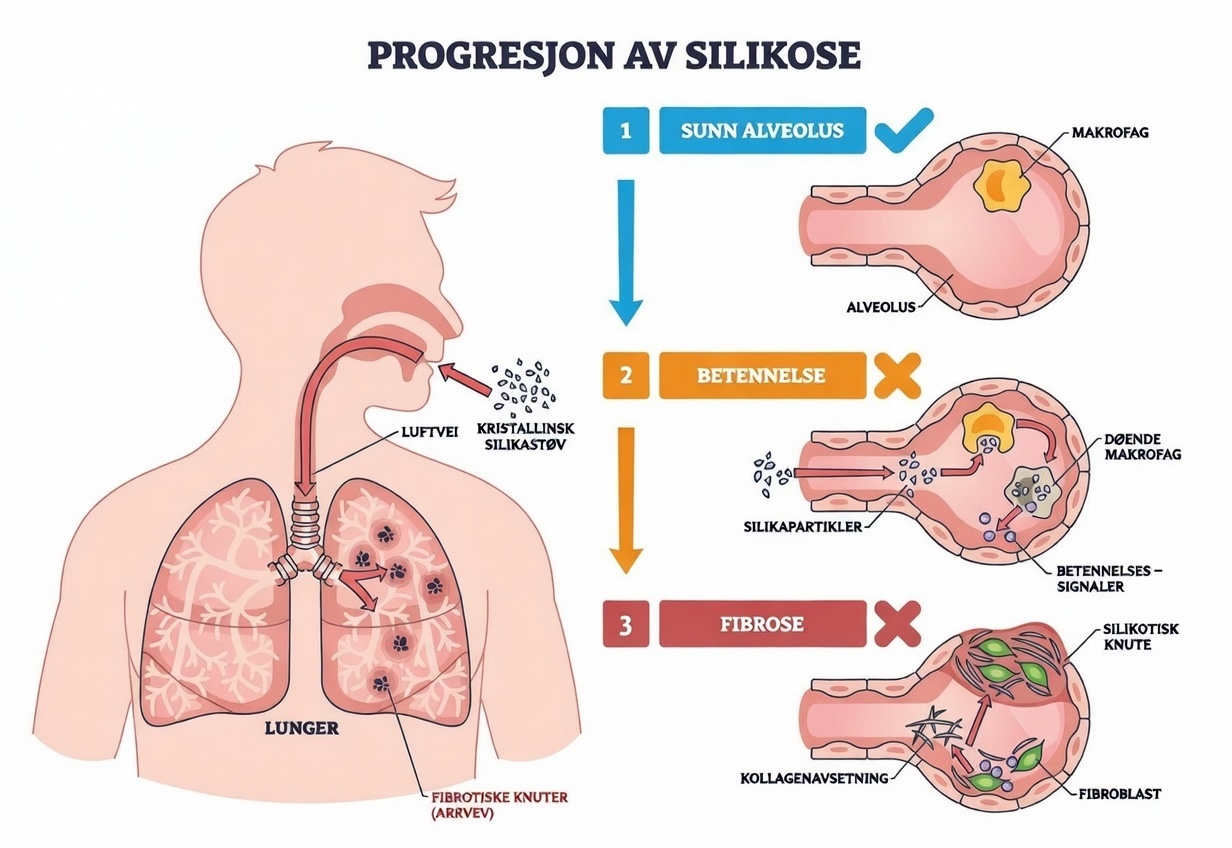
Silica or quartz dust is far more than just “ordinary dust”. The smallest particles (respirable) are so small that they penetrate the alveoli in the lungs. There they can remain for years and cause serious damage.
Prolonged exposure increases the risk of silicosis (stone lung) – an incurable lung disease, COPD, lung cancer and other serious respiratory diseases. Therefore, the limit value for respirable crystalline silica (quartz) is set very low – at 0.05 mg/m³ (lowered in 2021 based on updated health knowledge).
The Norwegian Labor Inspection Authority is now paying extra close attention to whether companies are actually staying below this value and implementing real preventive measures. Over the past month, we have been contacted by several industry players who have been inspected, and the trend is clearly upwards.
This is no longer about visible dust – it’s about what you can’t see.
The problem starts in the air
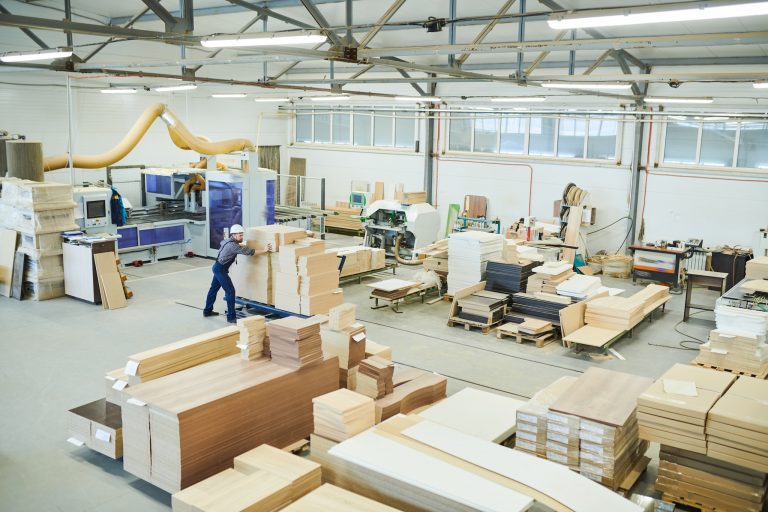
When concrete, stone, brick or other quartz-containing materials are cut, grinded, drilled or crushed, huge amounts of microscopic particles are released. The moment they become airborne, they change character: they no longer just settle in a pile around the machine. They are dispersed by air currents, ventilation systems, doors opening and closing, and people’s movements in the room. The particles settle on shelves, inside machines, in ventilation ducts – and not least: they are breathed in by everyone in the room, including those who do not work directly with the machine.
Traditional measures such as sweeping with a broom, simple spot extraction at the machine or the use of personal protective equipment (dust masks) only solve part of the problem – and often too late. Once the dust has become airborne and spread, exposure has already begun. The damage accumulates over time, without anyone noticing at the time. Read more about humidification vs dust filters.
The solution therefore needs to start earlier in the chain: stop the hazardous particles where they are produced – before they can spread throughout the production environment.
Humidification attacks the problem at the root
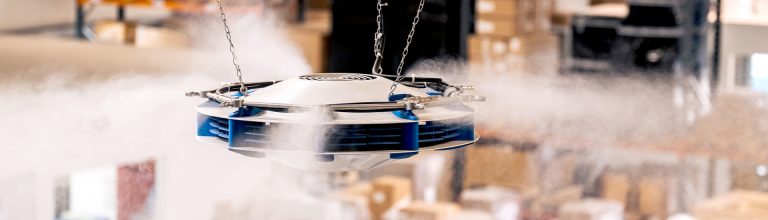
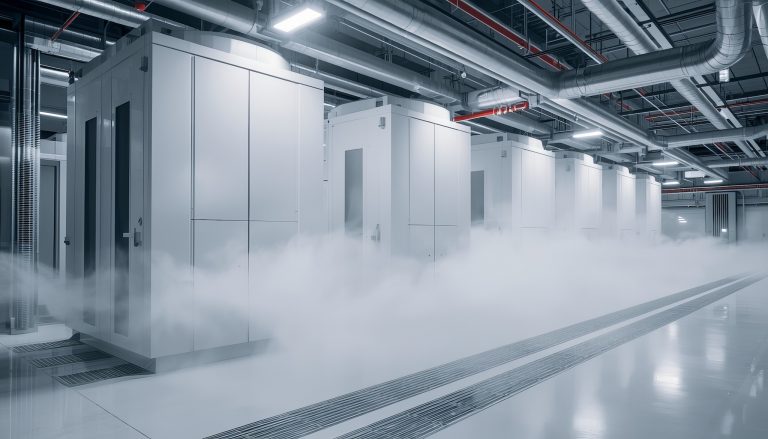
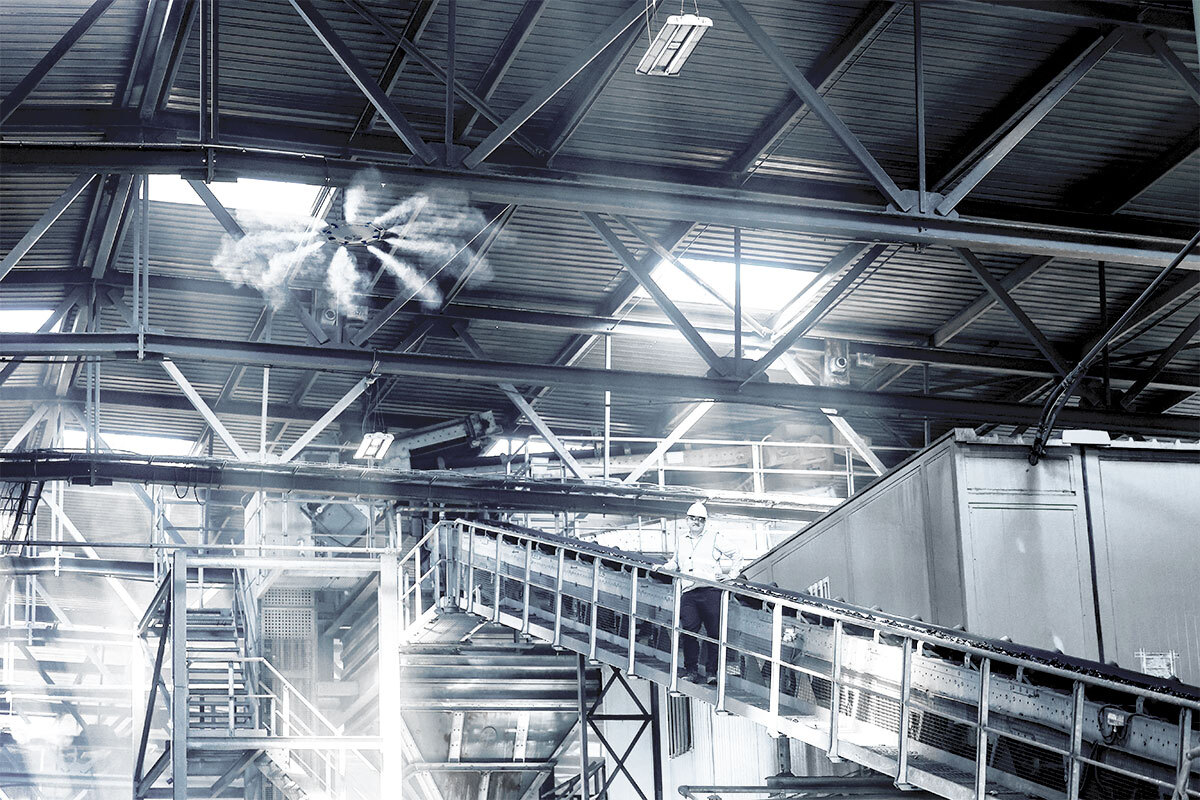
Controlled humidification of the air is one of the most effective methods for managing airborne particulate matter, including silica dust. The principle is simple, but the effect is fundamental. When the humidity is increased in a controlled and steady manner (typically using high-pressure humidifiers or ultrasonic systems), the tiny water droplets bind to the microscopic dust particles in the air. The particles become heavier, lose buoyancy and quickly fall to the floor – often close to where they were created.
You can almost imagine an invisible “blanket” of moisture in the air that traps the dust and holds it down, instead of letting it drift freely around the room and into people’s lungs. Not only does this dramatically reduce the concentration of particles in the air, it also prevents dust from settling on or entering machinery, equipment and products.
That’s why humidification is considered one of the strongest technical measures against particulate matter in many industries where traditional ventilation and extraction alone are not sufficient.
From reactive to preventive control
The Norwegian Labor Inspection Authority is crystal clear about employers’ obligations when it comes to silica dust:
- Mapping the risk through risk assessment
- Reduce exposure as far as possible – preferably at the source
- Implement technical measures before personal protective equipment
- Document all HSE work systematically
Controlled humidification fits perfectly into this context. It’s a technical, preventative measure that reduces the amount of airborne particles throughout the room – not just for the operator at the machine, but for all employees in the room. It shifts control from reactive “clean up afterwards” to proactive “stop the problem before it spreads“.
More than just regulations
Complying with the requirements of the Swedish Labor Inspection Authority is, of course, about avoiding fees, orders or suspensions – but it is first and foremost about something much more important: the long-term health of the employees, and the company’s own future.
Quartz dust gives no immediate pain or warning signal. It is the silent, cumulative effect over 10-30 years that causes illness. Many people who develop silicosis or lung cancer today were exposed for decades when they were less aware of the presence and effects of this almost invisible dust.
On the other hand, businesses that invest in good air control and humidification achieve multiple benefits simultaneously:
In summary
Quartz dust poses a serious and underreported health risk in many Norwegian workplaces. The Norwegian Labor Inspection Authority has greatly increased its focus, conducting more inspections than ever before, and the limit value of 0.05 mg/m³ requires active and documentable management.
The most effective way to meet the challenge is to prevent the dangerous, respirable particles from becoming airborne and spreading at all. Controlled humidification does just that – it tackles the problem at its root, keeping dust down where it originates and creating a healthier and safer working environment for everyone. This is how we move from “living with the dust” to taking control of it.
Are you ready to optimize your work environment with better indoor climate and cleaner air?
Klimabefuktning AS will assess which measures are best suited to your company and offer customized solutions for all stages of production.
Relevant sources (Norway)
https://www.arbeidstilsynet.no/risikofylt-arbeid/kjemikalier/kvarts
https://www.arbeidstilsynet.no/risikofylt-arbeid/kjemikalier/grenseverdier-for-kjemisk-pavirking
https://lovdata.no/forskrift/2011-12-06-1358
https://www.arbeidstilsynet.no/regelverk/forskrifter/forskrift-om-utforelse-av-arbeid